
Stopped Losing Weight on Semaglutide? Why Progress Halts and How to Restart It
When you no longer lose weight on semaglutide, you are not alone and nothing has gone wrong. This moment is frustrating to many people as they may fear that the medication has not worked, or that they are doing something wrong.
Weight loss plateaus are also exceptionally frequent in GLP-1 receptor agonists such as semaglutide. Actually, a majority of individuals that lose a considerable amount of weight on any intervention, including medications, enter into the periods when the scale merely ceases to move. This can feel alarming especially when early progress was rapid but a stall does not mean the medication stopped working or that you’ve failed.
Research published in the American Journal of Clinical Nutrition has shown that the body adapts to weight loss over time. As weight decreases, metabolism naturally slows, hormones adjust and total energy expenditure declines as a protective response. This physiological process known as adaptive thermogenesis, is the body’s way of conserving energy during periods of perceived scarcity and has been well documented in obesity research.
The first point that should be known is that a plateau is not the end of everything but rather a part of it. Panic, extreme reduction of calories or stopping treatment may tend to prolong the stall.
Physiological adaptation is typically the cause of the semaglutide plateaus and is not necessarily due to the lack of effort or determination and can be reversed with the help of appropriate adjustments.
How Semaglutide Really Works (and Doesn’t Work)
Semaglutide is not completely effective. As a GLP-1 receptor agonist, semaglutide mimics the activity of a glucagon-like peptide, one of the most significant roles of which is to control appetite, insulin secretion, and gastric emptying.
The mechanism of weight loss by semaglutide is the decrease in appetite and the increase in satiety levels, which were identified in the clinical trials published in the New England Journal of Medicine.
The words that are frequently misused include the fact that semaglutide changes the metabolism rules. In fact, it reduces the impetus to eat and enhances metabolic cues. However, it does so in the natural systems of adaptation in the body.
As the body loses more and more pounds, it further regulates the hormones and metabolism in an effort to compensate, or compensate well, as it does in the metabolism of obese physiology as explained by the National Institute of Diabetes and Digestive and Kidney Diseases (NIDDK).
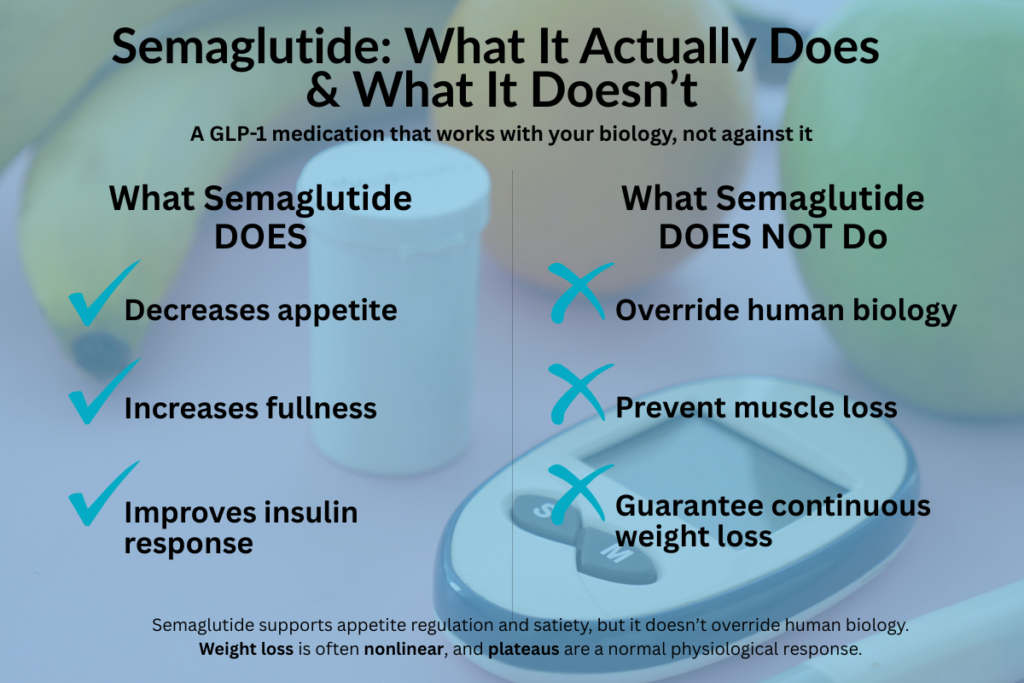
What Semaglutide does:
- Decreases appetite for food and sound.
- Retards stomach emptying and gives you more fullness.
- Enhances glucose tolerance and insulin sensitivity.
What Semaglutide does not do:
- It will not interfere with fundamental biology.
- It does not inhibit muscle loss.
- It does not guarantee linear or continuous weight loss.
Weight loss using semaglutide has been observed to be nonlinear with periods of accelerated, slowed, and plateau of losses, even in some of the largest studies.
The Real Reasons Weight Loss Stalls on Semaglutide
A. You Are Eating Too Little
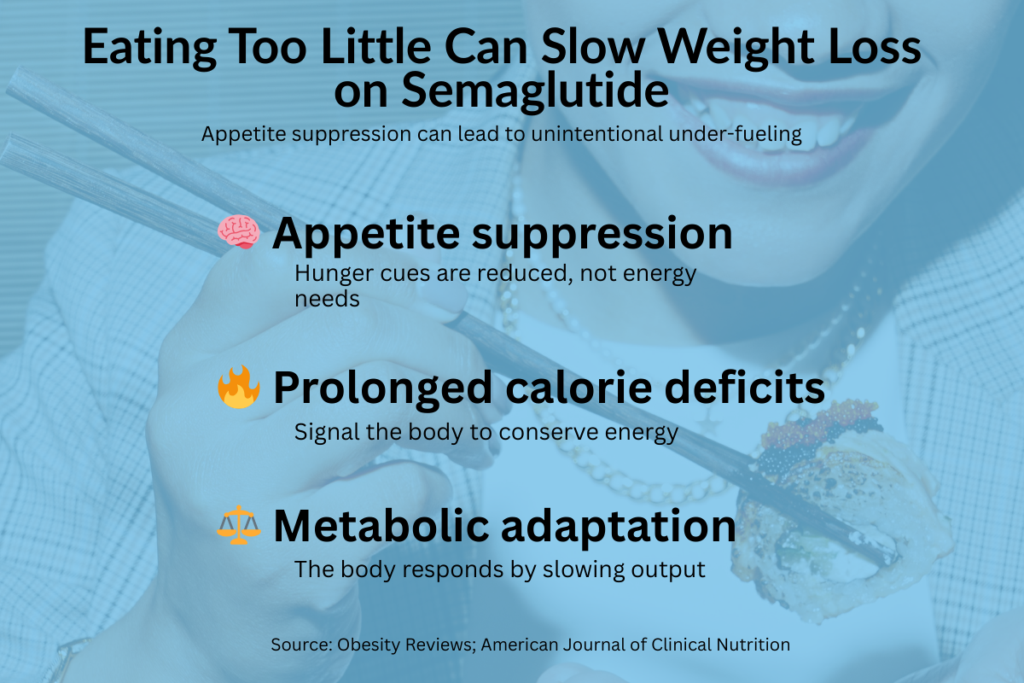
Among the most conflicting and frequent causes of stagnation in progress are the following:
As semaglutide acts so strongly on the appetite, dozens of people accidentally miss calorie restriction-meals, and the servings become tiny. Hunger signals are removed; thus, consumption becomes alright, even in cases of biological inadequacy. Although acute calorie deficit leads to weight loss, sustained under-fueling sends a mixed message to the organism.
The body perceives itself as being threatened with extinction; therefore, it activates a series of self-defense processes to aid in energy-saving over an extended period when the intake becomes too low. Some of these processes are as follows:
- A lowered resting metabolic rate is observed.
- Active T3 may be the product of transformations of T4.
- Cortisol levels are elevated, which stimulates fat storage and water gain.
A study on long-term calorie restriction in Obesity Reviews has established that metabolic responses may decrease daily energy expenditure much more than weight loss would imply.
The adaptation is not delicate. In long-term weight loss, there is evidence that the metabolism itself can still be suppressed despite an increase in calorie intake; hence, the additional limiting of intake during a plateau is usually counterproductive instead of stimulating.
The same was found in studies published in the American Journal of Clinical Nutrition, which found that aggressive caloric restriction may aggravate hormonal resistance to further fat loss.
Common signs of under-fueling include:
- Persistent fatigue.
- Feeling cold easily.
- Hair loss or thinning
- Irritable.
- Weight, which does not reduce despite extremely low intake
B. Muscle Loss Is Slowing Your Metabolism
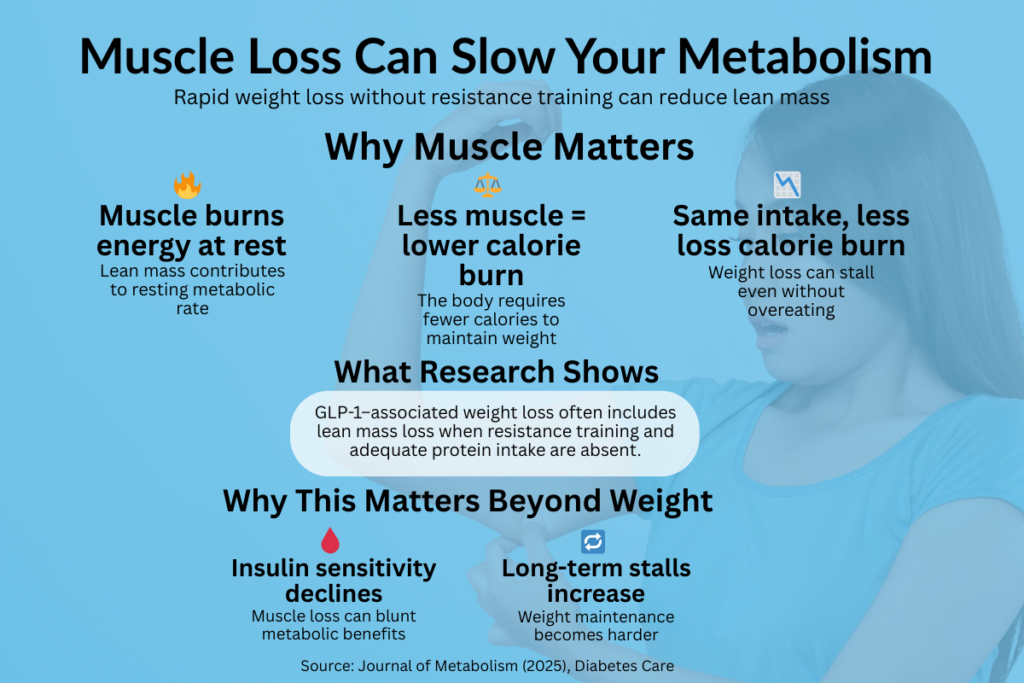
Quick weight loss particularly in the absence of resistance training is likely to cause a great deal of lean mass loss.
The muscle tissue is active in metabolism and contributes significantly to the energy expenditure at rest. Loss of muscle implies that the body is less efficient in burning calories when you are in a resting position hence the same intake that previously led to weight loss can now be used to sustain the weight.
A 2025 analysis in the Journal of Metabolism found that GLP-1–associated weight loss often includes measurable lean mass loss when resistance training and adequate protein intake are absent.
This is important because muscle loss does more than slow metabolism; it can also impair insulin sensitivity over time, potentially blunting one of semaglutide’s key metabolic benefits. Supporting this, research published in Diabetes Care demonstrates that preserving lean mass improves both long-term glucose control and weight maintenance.
Therefore, it is one of the most commonly ignored reasons why GLP-1 users get weight loss stalls but at the same time one of the most treated with the help of adequate resistance training and nutrition regimens.
C. You’ve Hit a Set Point (Temporary, Not Permanent)
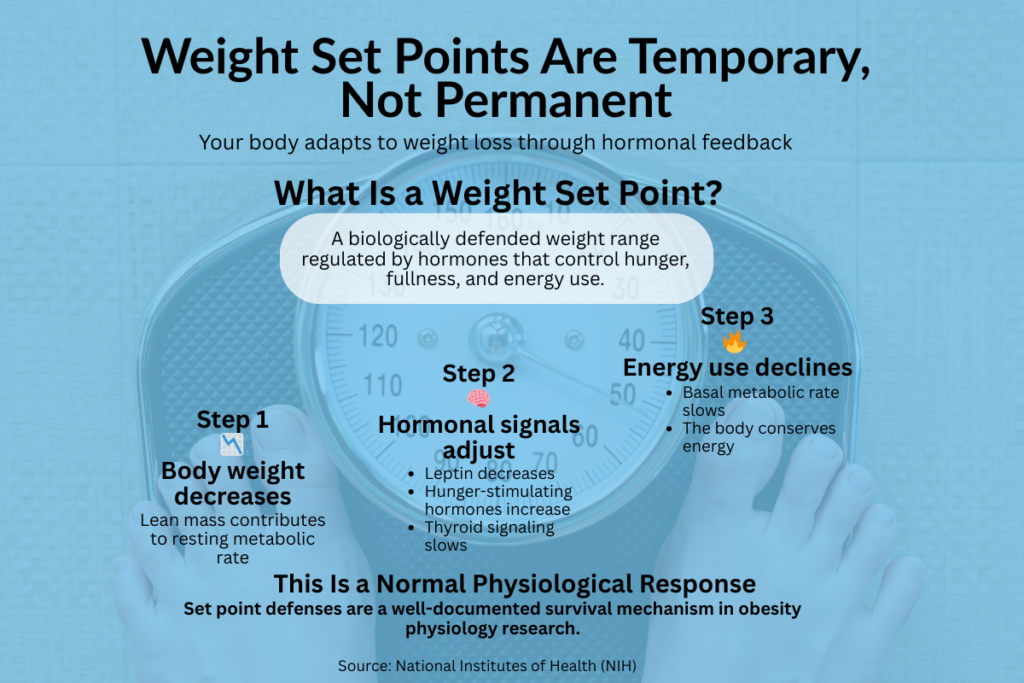
Within a body, there are favorite weight ranges that it attempts to guard. Such a concept of a weight set point is usually regulated by a highly complicated set of hormonal feedback mechanisms involving leptin, ghrelin, insulin, and thyroid hormones.
As weight decreases:
- The leptin levels become lower, which leads to a decreased amount of stimulating the satiety feelings.
- The hormones that stimulate hunger are elevated even when the appetite is dulled.
- This slows down the basal metabolic rate so as to conserve the stored energy.
This is an adaptive response that has been extensively reported under obesity physiology research, including National Institutes of Health..
Realize that there is no fixed weight limit that one can maintain but cannot be displaced through starvation or merciless restriction. Studies have shown that a more gradual adequately fueled weight loss program using exercise is much more effective at modulating defended weight ranges than a rapid dieting program as highlighted in Nature Reviews Endocrinology.
D. Protein Intake Is Too Low
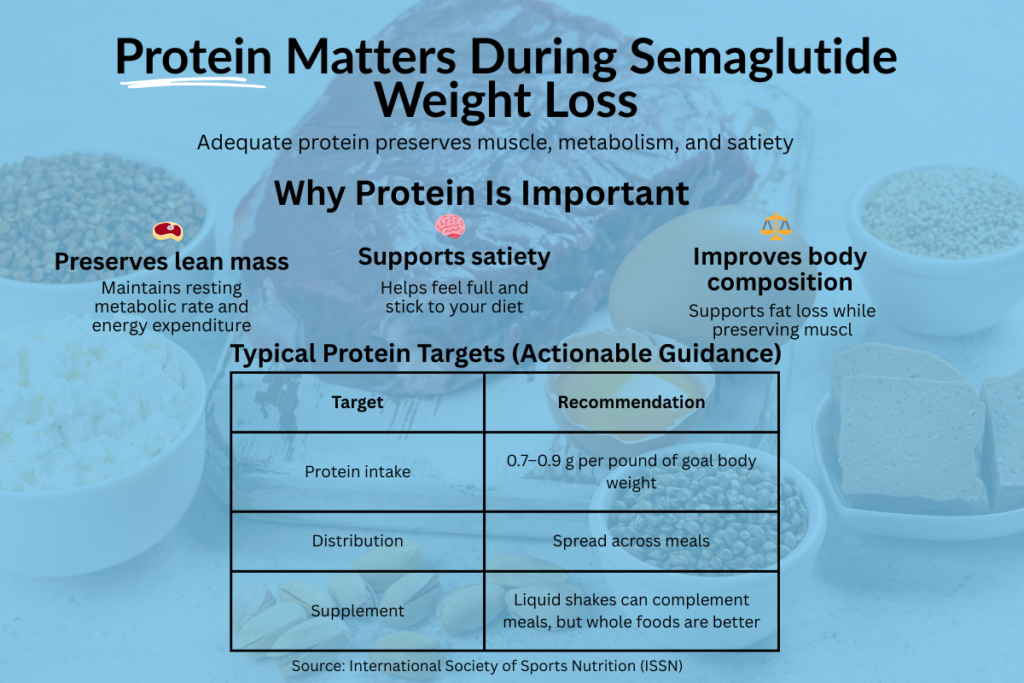
Proteins are pushed to the background by the diminished appetite.An individual with the sensation of fullness sooner would consume less of anything that is most available, which in most cases are carbohydrates or lipids and their protein intake would decrease silently in the background.
This is somewhat problematic as the second issue is that proteins are not the option in a diet aimed at losing weight. They are the structural but not only chronic proteins.
Protein is essential for:
- Preserving green mass
- Resting metabolic rate Supporting.
- Increasing Satiety, and Diet adherence.
- Improving Body Composition and not Body Weight.
Increased protein dieting during weight loss is good in terms of preserving lean mass and fat loss as suggested in the International Society of Sports Nutrition.
Simple protein targets:
- Less than 0.7- 0.9 grams per pound of goal body weight.
- Dispersed over meals, not under one sitting.
Liquid protein shakes and calories can be used as supplements but their ability to stimulate muscle protein synthesis is not as effective as whole-food sources of protein. This is the reason why they must be used to complement rather than substitute meals particularly in the backdrop of GLP-1-based appetite inhibition.
These targets should be amended as necessary based on medical conditions, age and sex as well as the size of the body as they differ.
E. Dose Escalation Isn’t Always the Fix
When the loss of weight stops, the automatic thought is that the dose should be increased, but the maximum doses of Semaglutide simply increase side effects, which are not always beneficial in promoting weight loss but may also increase side effects such as nausea, vomiting, heartburn, and constipation.
The clinical guidelines by the American Diabetes Association suggest that they should be administered individually based on tolerance, intake and behavioral traits and not reactively to overcome the effects of rising weight.
Increasing dosage without taking into account the nutritional requirements, protein intake, muscle prevention and recovery is a phenomenon that leads to decreasing returns.
How to Restart Weight Loss on Semaglutide (Safely)
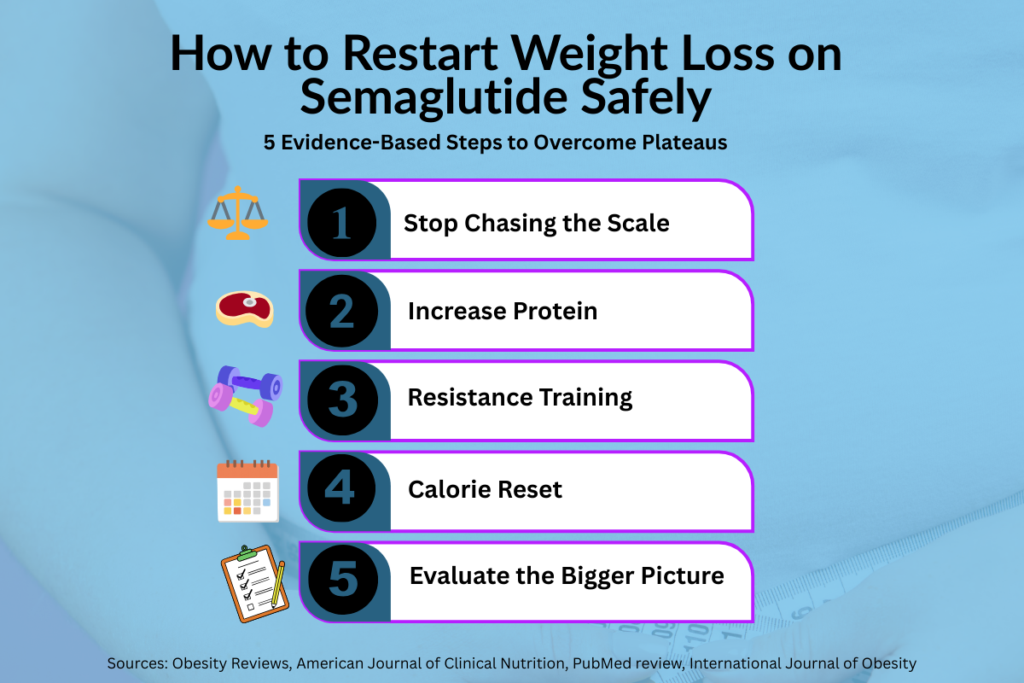
Step 1: Stop Chasing the Scale
The scale does not measure accurately. The gain and loss of weight experienced on a daily to daily basis due to water retention, glycogen stores, hormonal imbalances and inflammation may be masking fat burning over an extended duration.
Body recomposition, during fat burning with a maintaining or increase in the number of muscles, is first seen in real measurements, in clothing obsolescence or body energy level and not on the scale.
In order to monitor progress better:
- Measure hips and waist frequently.
- Take record progress pictures in various angles.
- Checking the strength performance during exercises, even minor improvements.
Studies in the Obesity Reviews have pointed out that non-scale measures are more effective in predicting outcome than the one indicated on the scale: “Non-scale measures are being suggested as alternative means of determining.
Step 2: Increases Protein Prior to Cutting Carbs
Protein should be maximized before reducing the caloric intake. Protein is relevant because it aids in the maintenance of muscles. In this way, it is easy to lose weight.
Practical Strategies:
- Aim at 25 to 40g of protein every meal.
- Eat proteins at breakfast so that they are given first before any other food.
- Protein at the beginning of the day.
It was discovered in a research published in American Journal of Clinical Nutrition,that the thermic effect of protein is the highest, i.e. the metabolisms require more calories in the process of protein compared to the same process of fats and carbohydrates in the maintenance of the metabolism.
Step 3: Add Resistance Training (Even Light)
One does not have to be gym crazy. The required number of sessions would be two to three sessions per week body weight, resistance bands and light dumbbells, as it would be enough to:
- Preserve lean mass
- Support resting metabolism
- Increase Insulin Sensitivity.
The review of studies in PubMed indicated that the combination effects of resistance exercise and GLP-1 therapy have been found to enhance body composition outcomes in comparison to the results of medication.
Even light resistance exercise is able to counter some of the muscle loss that has been included in the course of weight loss and is necessary in the re-establishment of fat loss.
Step 4. Consider a Strategic Calorie Reset
Or it only requires some assurance that everything will be alright. An artificial, temporary high energy intake, also known as a calorie reset or diet break, is enough to lower the production of the stress hormones and the sign of safety, and can be followed by fat loss.
According to a study that was published in the International Journal of Obesity, intermittent periods of dieting can be beneficial in terms of decreasing the metabolic capacities and allowing the future weight loss to be more sustainable.
These ought to be scheduled, time based reset and not uncontrolled and emotionally motivated. As an example, high-protein nutrient-dense food can be increased by 5-7 days and still get the process of fat burning going again without derailing the whole process.
Step 5. Evaluate the Bigger Picture
Semaglutide seems to be better utilised as a part of a larger system and not as an individual treatment. The fat loss stalling has the tendency to be frequently connected with the general lifestyle factors:
- Sleep: Poor Sleep or lack of sleep as a factor in preventing fat loss when in a caloric deficit.
- Stress: Cortisol production in the body has been found to inhibit when an individual experiences stress.
- Alcohol: Excessive use is a cause of empty calories and distortion of metabolic regulation.
- Medications/Hormonal imbalance: Thyroid, Reproductive, Metabolic problems may be relevant.
All these combined with the protein intake and calorie manipulations will provide the most favorable environment to support semaglutide and help patients get through any plateau in their treatment plan successfully and safely.
When to Adjust or Combine Therapies
In some cases, weight loss plateaus on semaglutide are not necessarily explained only by diet, exercising and lifestyle factors. This creates the need to adjust or to combine measures to jumpstart progress in a safe and sustainable manner. It is particularly pertinent to patients who have already reached a plateau that has been going on in weeks or even longer despite adherence.
This is where the use of structured nutrition coaching is introduced, in order to maximize the intake of macro nutrients, regulate the timing of meals and calorie deficits that happen unconsciously, as a result of the inhibited appetite. Furthermore, a nutrition coach or registered dietitian will prescribe nutrition plans to the person, which tends to result in a more consistent loss of fat with preservation of lean mass.
According to Endocrine Society Clinical Practice Guidelines , the long term success of the GLP One treatment is significantly enhanced in case a program of physical activity and healthy sport nutrition is implemented. Physical exercise and behavior changes.
According to a study by The Lancet Diabetes & Endocrinology, medications and some behavioral or lifestyle changes have been demonstrated to be more efficient than medications in long-term weight loss.
The fact that combination therapies should in the end amount to a final resort, and not a first-line solution is a symptom of the multifactoriality of the disease, and the fact that permanent reduction of weight can only be done in a multidisciplinary fashion.
When Semaglutide Truly May Not Be Enough
Even though semaglutide glutide is an extremely effective medication in most patients, it cannot be offered as a universal solution to all of them since there are those who might reach a plateau or be slow in their weight loss, not because of its ineffectiveness or non-effort, but because of their physiology.
There is another possibility of advanced insulin resistance. Long-term insulin resistance may also cause an individual to fail to lose fat in the presence of an appetite suppressant due to the uninterrupted storage of energy in the adipose tissue.
Besides, individuals with a long history of repeated dieting patterns and metabolic adjustment can also result in the development of a metabolic type that would be less sensitive to diet-driven adjustments having low resting energy expenditure and robust hormonal defenses against fat breakdown. It can also be the genetic dispositions that play a role in the regulation of energy.
The genetic differences on the areas relating to human consumption, handling of the human body and storing the body fats may render a person less sensitive to weight loss efforts. These are ceasing to be a subject of will but a biological reality.
This, of course, does not imply failures and not trying. This is because the strategy must fail.To suit your physiology. Other strategies in consultation with medical professionals can also be required in the case of such patients such as taking several medications, metabolic work-up, and visiting weight control specialists.
In the article published in Diabetes, Obesity and Metabolism, it is mentioned in the clinical review that under the integration of pharmacologic therapy and individually-based nutrition, exercise and psychological interventions, the likelihoods of success in patients with complex metabolic histories are high.
FAQS
1. What are the average semaglutide plateau durations?
Semaglutide plateaus may take between a few weeks and a few months depending on the metabolic adjustment, muscle maintenance, and the overall changes made to lifestyle. The majority of plateaus are lost when the body becomes accustomed to it and nutritional or training reforms are established accordingly.
2. Would it be effective to raise my semaglutide dose when I enter a plateau?
It may not be so, as dose increment should be of strategic and doctor-suggested nature since higher doses may be increasing the number of side effects and fail to deal with the actual cause of stagnant weight loss, which is likely to be low protein consumption or lean tissue loss.
3. Does this plateau imply that semaglutide is not going to work on me?
No, a plateau is not any indicator that semaglutide is not working or that the treatment is not effective. It typically indicates short-term physiological adjustment and most individuals, through appropriate modifications, are able to revert to gradual and normal development.
4. Is stress or sleep deprivation an inhibitor of weight loss on semaglutide?
Yes. Stress that is chronic and lack of sleep may elevate the level of cortisol and disrupt the hormones that are involved in fat burning to cause plateaus despite the constant calorie consumption and the use of medication.
Progress Isn’t Over
When you have reached a stalemate in the weight loss process, you are not finished. It’s just beginning,
Plateaus do not mean a pause, but they are a call to make smarter changes, not more difficult rules.
Presuming appropriate approach, encouragement and outlook, things will most certainly pick up, and maybe better and more resilient than ever.
When you are not losing weight, it is not often that you need to work harder. It’s usually “adjust smarter. Professional guidance can make the difference.
References:
- https://ajcn.nutrition.org/article/S0002-9165(22)00892-9/fulltext
- https://www.nejm.org/doi/full/10.1056/NEJMoa2032183
- https://www.niddk.nih.gov/about-niddk/research-areas/obesity
- https://onlinelibrary.wiley.com/doi/10.1111/obr.12783
- https://www.sciencedirect.com/science/article/abs/pii/S002604952400341X
- https://diabetesjournals.org/care/article-abstract/42/6/1067/36035/Efficacy-and-Safety-of-Empagliflozin-in-Renal?redirectedFrom=fulltext
- https://pmc.ncbi.nlm.nih.gov/articles/PMC5764193/
- https://www.nature.com/articles/nrendo.2016.136
- https://link.springer.com/article/10.1186/s12970-017-0177-8
- https://diabetesjournals.org/care/article/46/Supplement_1/S140/148057/9-Pharmacologic-Approaches-to-Glycemic-Treatment
- https://pubmed.ncbi.nlm.nih.gov/35355007/
- https://www.nature.com/articles/ijo2017206
- https://www.acpjournals.org/doi/10.7326/0003-4819-153-7-201010050-00006
- https://www.endocrine.org/clinical-practice-guidelines/pharmacological-management-of-obesity
- https://www.thelancet.com/journals/eclinm/article/PIIS2589-5370(24)00054-3/fulltext
- https://dom-pubs.onlinelibrary.wiley.com/doi/full/10.1111/dom.14372